


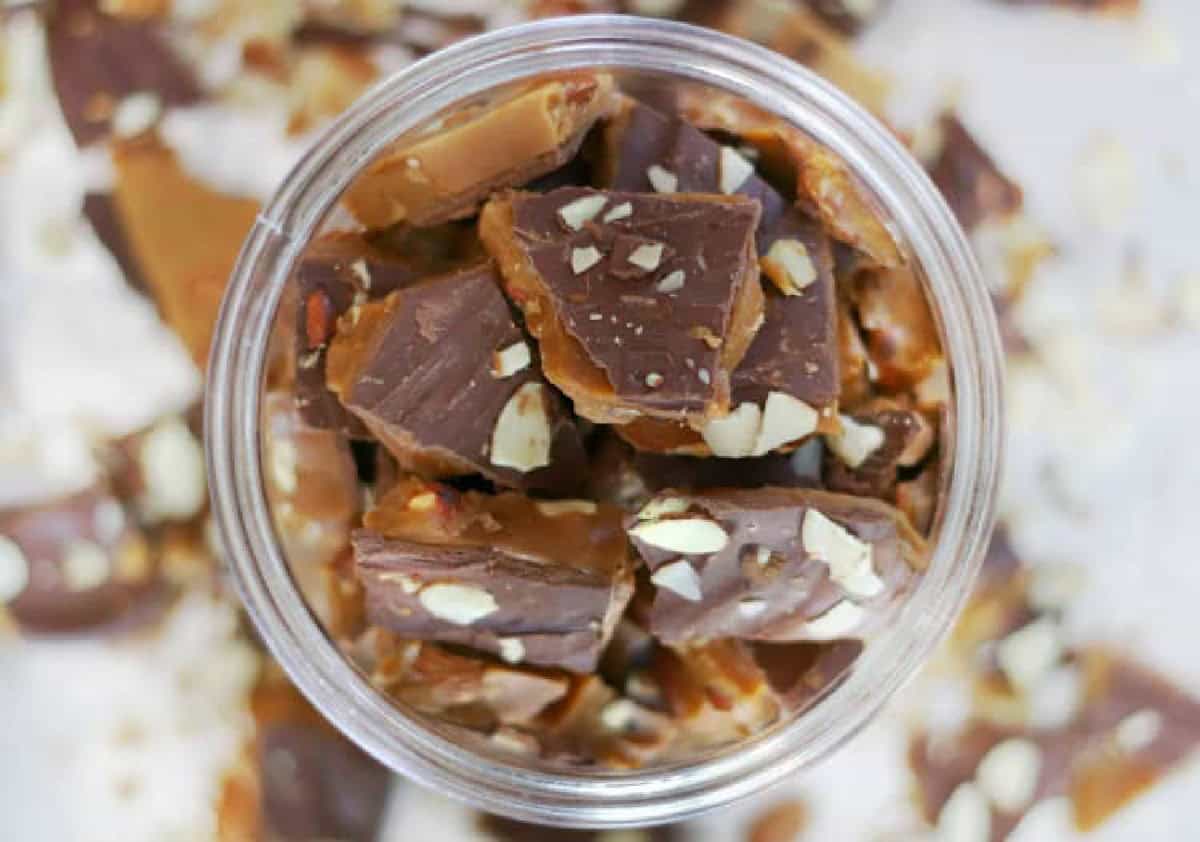

Toffee: A Buttery, Crunchy Classic
Toffee is a rich confection made by cooking sugar and butter together until the mixture becomes deeply golden and develops a crisp, brittle texture. Depending on the recipe, it may be enjoyed on its own or coated with chocolate and topped with nuts. Its balance of buttery flavor, caramel-like sweetness, and satisfying crunch has made toffee a favorite for generations.
What Is Toffee?
At its simplest, toffee is made from sugar and butter. Some recipes also include salt, vanilla, or a small amount of water or corn syrup. The ingredients are heated until they reach a high temperature, causing the sugar to caramelize and the mixture to set firmly as it cools.
Toffee is sometimes confused with caramel, but the two candies are usually cooked to different temperatures and have different textures. Caramel is typically softer and chewier, while hard toffee snaps when broken. The exact texture depends on the recipe and how long the mixture cooks.
A Little History
Toffee has long been associated with British confectionery, though the word’s origins and the candy’s early history are not entirely clear. Over time, toffee recipes spread and evolved. Today, the sweet is enjoyed in many forms around the world, from simple pieces of hard candy to chocolate-covered slabs scattered with chopped nuts.
Popular Types of Toffee
- Classic hard toffee: A crisp, buttery candy that can be broken into small pieces.
- Chocolate-covered toffee: A layer of chocolate adds a smooth contrast to the crunchy center.
- Nut-topped toffee: Almonds, pecans, or other nuts contribute extra crunch and a toasted flavor.
- Soft toffee: Cooked or prepared for a more tender, chewy texture.
- Toffee pieces: Small bits used as a topping or mixed into cookies, brownies, and ice cream.
“English toffee” is a common name for a style of buttery toffee often paired with chocolate and almonds. Recipes vary, so the name does not always refer to one exact formula.
How Toffee Is Made
Making toffee involves heating sugar and butter while carefully monitoring the temperature. As the mixture cooks, it changes color and thickens. Once it reaches the desired stage, it is poured onto a prepared surface to cool. Chocolate or nuts may be added before or after the candy sets.
Because hot sugar can cause serious burns, homemade toffee should be prepared with care. A heavy saucepan, a reliable candy thermometer, and close attention can help produce more consistent results. Avoid tasting the mixture while it is hot, and keep children and pets away from the cooking area.
Serving and Storing Toffee
Toffee makes a welcome addition to dessert platters and gift boxes, and small pieces can add crunch to baked goods or frozen desserts. For the best texture, store it in an airtight container in a cool, dry place. Moisture and heat can make the candy sticky or soften its snap.
A Sweet Treat for Any Occasion
Whether enjoyed as a simple buttery candy or dressed up with chocolate and nuts, toffee offers a distinctive combination of sweetness, richness, and crunch. Its straightforward ingredients and many variations make it a timeless confection to savor, share, or use to add a little extra indulgence to desserts.
Toffee FAQs: Ingredients, Caramel Differences, Homemade Tips, Storage, and Allergens
- What is toffee made of?
- What is the difference between toffee and caramel?
- Why did my toffee turn out chewy instead of crunchy?
- How do you make homemade toffee?
- How should toffee be stored?
- Does toffee contain dairy or gluten?
What is toffee made of?
Toffee is typically made by cooking butter and sugar together until the mixture caramelizes and sets into a firm, crunchy candy. Some recipes also include salt, vanilla, or other flavorings, while popular varieties may be coated in chocolate or topped with nuts such as almonds or pecans.
What is the difference between toffee and caramel?
Toffee and caramel are both made by heating sugar, but they differ in their ingredients, cooking process, and texture. Toffee usually includes butter and is cooked to a higher temperature, giving it a firm, crisp snap. Caramel is often made with sugar, cream, and butter, and is cooked to a lower temperature for a softer, chewier texture. Recipes vary, but toffee is generally crunchy while caramel is typically smooth and pliable.
Why did my toffee turn out chewy instead of crunchy?
Toffee usually turns chewy instead of crunchy when it hasn’t been cooked to a high enough temperature, so not enough moisture has evaporated for the candy to set firmly. Use a candy thermometer and cook the mixture to the temperature specified in your recipe, typically the hard-crack stage, while stirring as directed. Humidity can also affect the finished texture, and inaccurate thermometer readings may lead to undercooking. Let the toffee cool completely in a dry place before breaking it, since it may seem soft while still warm.
How do you make homemade toffee?
To make homemade toffee, melt butter and sugar together in a heavy saucepan, stirring constantly as the mixture cooks until it reaches about 300°F (the hard-crack stage) and turns a deep golden color. Carefully pour it onto a parchment-lined baking sheet and let it cool completely; add chocolate or chopped nuts if desired. Hot sugar can cause severe burns, so use a candy thermometer and handle the mixture with care.
How should toffee be stored?
Store toffee in an airtight container in a cool, dry place, away from heat, sunlight, and moisture. Keep pieces separated with parchment paper to help prevent sticking. Avoid refrigerating it, since condensation can make the toffee sticky; if your room is warm, choose the coolest dry spot available. Properly stored, toffee can stay crisp and flavorful for several weeks.
Does toffee contain dairy or gluten?
Traditional toffee usually contains dairy because it’s made with butter, though dairy-free versions are available. Toffee is generally made without gluten-containing ingredients, but recipes and manufacturing practices vary, and add-ins or cross-contact may introduce gluten. Check the product label or ask the maker about allergens if you have a dairy or gluten sensitivity.