


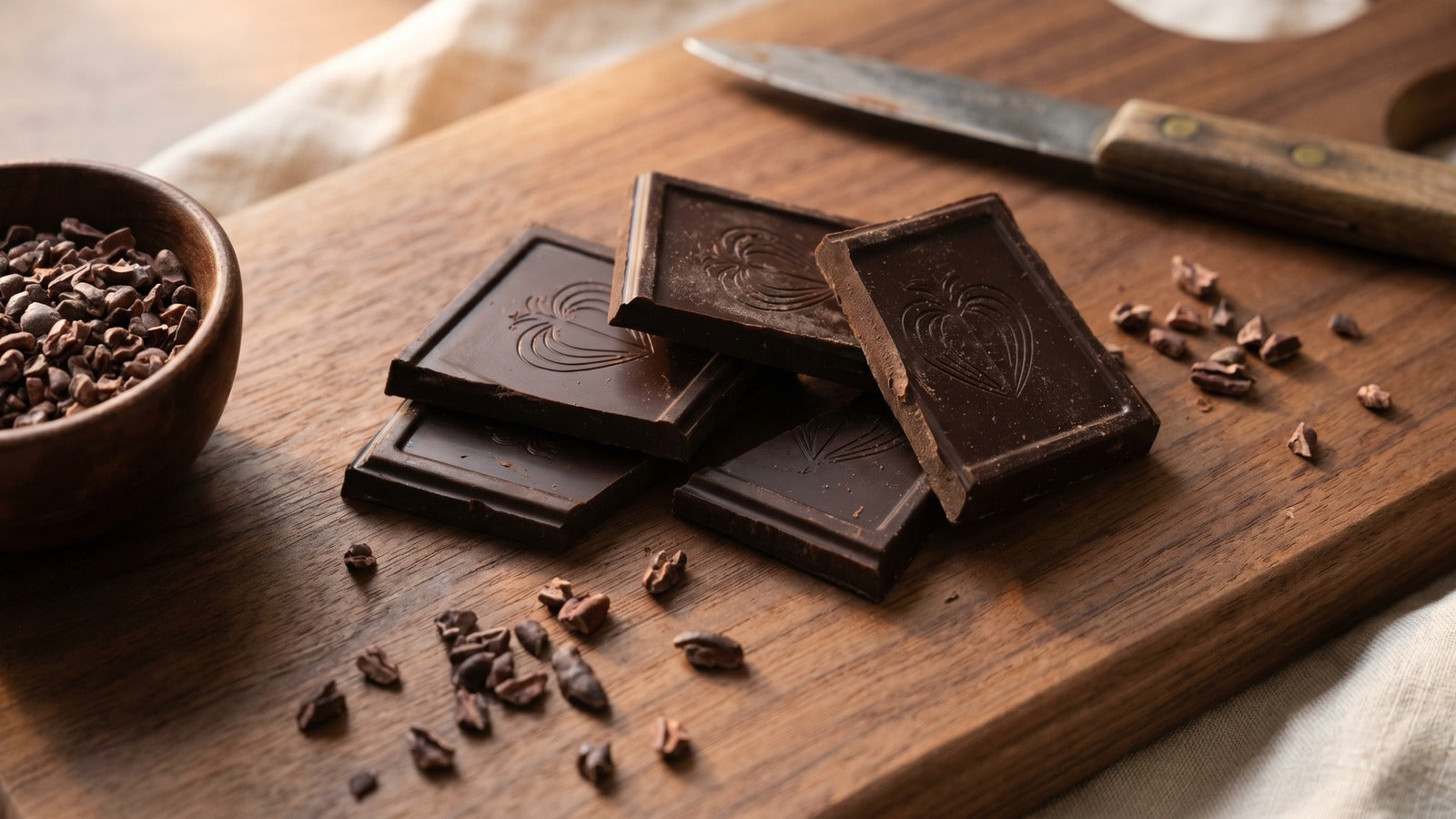

Dark Chocolate: Rich Flavor, History, and How to Enjoy It
Dark chocolate is prized for its deep cocoa flavor, smooth texture, and versatility. It can be enjoyed on its own, paired with coffee or fruit, or used to add richness to desserts. Whether you prefer a mellow bar or a more intense, bittersweet taste, understanding how dark chocolate is made can help you find the kind you love.
What Is Dark Chocolate?
Dark chocolate is made primarily from cocoa solids and cocoa butter, usually with sugar added for sweetness. Unlike milk chocolate, it contains little or no milk ingredients. Its flavor and texture depend on factors such as the cocoa beans, how they are fermented and roasted, and the proportions of cocoa, sugar, and other ingredients.
Chocolate labels often display a cocoa percentage, such as 60%, 70%, or 85%. This figure indicates the share of the chocolate made from cocoa ingredients. A higher percentage generally means less room for sugar, but it does not guarantee that the chocolate will taste more bitter. The type of cocoa and the maker’s process also shape the flavor.
A Flavor with Many Notes
Dark chocolate can have a wide range of flavors. Depending on the beans and how they are processed, you may notice notes of fruit, nuts, caramel, coffee, spices, or earth. Some bars are bright and fruity, while others are mellow, roasted, or intensely bittersweet.
To taste a piece, let it soften slightly in your mouth rather than chewing it right away. Notice its aroma, how it melts, and the flavors that appear as you savor it. A well-made bar may have a clean snap when broken, though texture varies by style and temperature.
Choosing a Bar
Start with a cocoa percentage that suits your taste. If you are new to dark chocolate, a bar around 50% to 65% may offer a gentler introduction. If you enjoy more concentrated cocoa flavors, try a bar with a higher percentage. Comparing a few bars side by side can help you discover whether you prefer fruitier, nuttier, or more roasted profiles.
Check the ingredient list, too. A simple list often includes cocoa mass or cocoa liquor, cocoa butter, sugar, and sometimes vanilla or lecithin. The percentage alone does not tell the whole story, and personal preference is the best guide.
Dark Chocolate in the Kitchen
Dark chocolate is a useful ingredient in both sweet and savory cooking. It can be melted for ganache, folded into cookie dough, shaved over desserts, or stirred into sauces. In small amounts, it can also add depth to certain chili or mole-style dishes.
For a simple pairing, try dark chocolate with fresh berries, toasted nuts, dried fruit, or a cup of coffee or tea. Contrasting flavors—such as tart fruit or a pinch of flaky salt—can make each bite more vivid.
Storage and Enjoyment
Keep chocolate in a cool, dry place away from strong odors and direct sunlight. Warm temperatures can cause it to melt, while temperature changes may lead to a pale surface called bloom. Bloom can affect appearance and texture, but it does not necessarily mean the chocolate is unsafe to eat.
A Treat to Savor
Dark chocolate’s appeal lies in its variety: each bar can offer a different balance of sweetness, bitterness, aroma, and texture. Explore different cocoa percentages and origins, enjoy it in moderation, and take time to savor the flavors. The best dark chocolate is ultimately the one that brings you the most pleasure.
5 Reasons to Indulge in Dark Chocolate: A Flavorful and Versatile Treat
- Rich, complex flavor
- Pairs well with fruit and coffee
- Great for baking and desserts
- Available in a range of cocoa intensities
- A satisfying treat to savor
Potential Drawbacks of Dark Chocolate: Bitterness, Added Sugars, Caffeine, and Allergy Concerns
- Can be bitter for some tastes.
- May contain added sugar and calories.
- Contains caffeine and theobromine.
- Can trigger allergies or sensitivities.
Rich, complex flavor
Dark chocolate is loved for its rich, complex flavor, which can unfold in layers as you savor each bite. Depending on the cocoa beans and how they’re made, you may notice notes of berries, toasted nuts, coffee, caramel, or warm spices alongside its signature bittersweet taste. This depth makes dark chocolate satisfying on its own and a delicious match for fruit, coffee, and other treats.
Pairs well with fruit and coffee
Dark chocolate pairs beautifully with both fruit and coffee. Its rich, bittersweet flavor balances the natural sweetness and bright acidity of berries, oranges, and dried fruit, while a cup of coffee brings out its roasted, earthy notes. Enjoy them together for a simple, satisfying treat, or combine all three for an easy dessert pairing.
Great for baking and desserts
Dark chocolate is a versatile choice for baking and desserts, bringing rich cocoa flavor and balanced sweetness to everything from brownies and cookies to cakes, mousses, and ganache. It melts smoothly into sauces and fillings, and chopped pieces add delicious pockets of chocolate to baked treats. Its bold flavor also pairs beautifully with ingredients like berries, nuts, caramel, and coffee.
Available in a range of cocoa intensities
Dark chocolate is available in a range of cocoa intensities, making it easy to find a style that suits your taste. A lower cocoa percentage is often milder and sweeter, while a higher percentage tends to have a bolder, more pronounced cocoa flavor. Since each chocolate is different, exploring a few varieties can help you discover the balance of sweetness and intensity you enjoy most.
A satisfying treat to savor
Dark chocolate makes a satisfying treat to savor, thanks to its rich flavor and smooth, slowly melting texture. Taking time to enjoy a small piece lets you notice its layers of sweetness, bitterness, and cocoa aroma, turning a simple bite into a moment of pleasure.
Can be bitter for some tastes.
Dark chocolate’s bold, cocoa-forward flavor can taste too bitter for some people, especially in bars with a high cocoa percentage. With less sugar to balance the natural intensity of cocoa, it may be less appealing to those who prefer sweeter, milder chocolate. Trying a lower-percentage bar can offer a gentler introduction.
May contain added sugar and calories.
Dark chocolate can contain added sugar and calories, especially varieties with a lower cocoa percentage or added ingredients like caramel, nuts, or fillings. Enjoying large portions may contribute more sugar and calories than intended, so check the nutrition label and savor a serving that fits your preferences.
Contains caffeine and theobromine.
Dark chocolate contains caffeine and theobromine, natural stimulants that may affect people who are sensitive to them. Eating it—especially in larger amounts or close to bedtime—can make it harder to fall asleep or may cause restlessness, jitters, or a racing heartbeat in some people. The amount varies by product, so check the label and consider enjoying smaller portions if these effects concern you.
Can trigger allergies or sensitivities.
Dark chocolate can trigger allergies or sensitivities in some people. Depending on the product, it may contain or come into contact with common allergens such as milk, soy, peanuts, or tree nuts, while cocoa itself may also cause reactions in rare cases. Some people are sensitive to caffeine or other naturally occurring compounds in chocolate and may experience symptoms such as headaches or digestive discomfort. Check ingredient and allergen labels carefully, and avoid dark chocolate if it causes a reaction.